5G Home Internet: Real Speeds, Pros and Cons in 2026
5G home internet is now available to over 50 million US homes. The pitch is compelling: no installation, no contract, just plug in a gateway and go. But what does it actually deliver?
1. What is 5G home internet?
Fixed Wireless Access (FWA) using 5G transmits your internet connection wirelessly from a nearby 5G cell tower to a gateway device in your home. Unlike mobile 5G on your phone, 5G home internet is optimised for stationary use — the gateway has better antennas and prioritisation than a smartphone.
The main providers in 2026: T-Mobile Home Internet (largest coverage), Verizon 5G Home Internet (best mmWave speeds), and AT&T Internet Air. Globally, providers like Three (UK), SFR (France) and others offer equivalent fixed 5G products.
2. Real-world 5G home internet speeds
Marketed speeds are maximums. Here's what aggregated user speed test data shows:
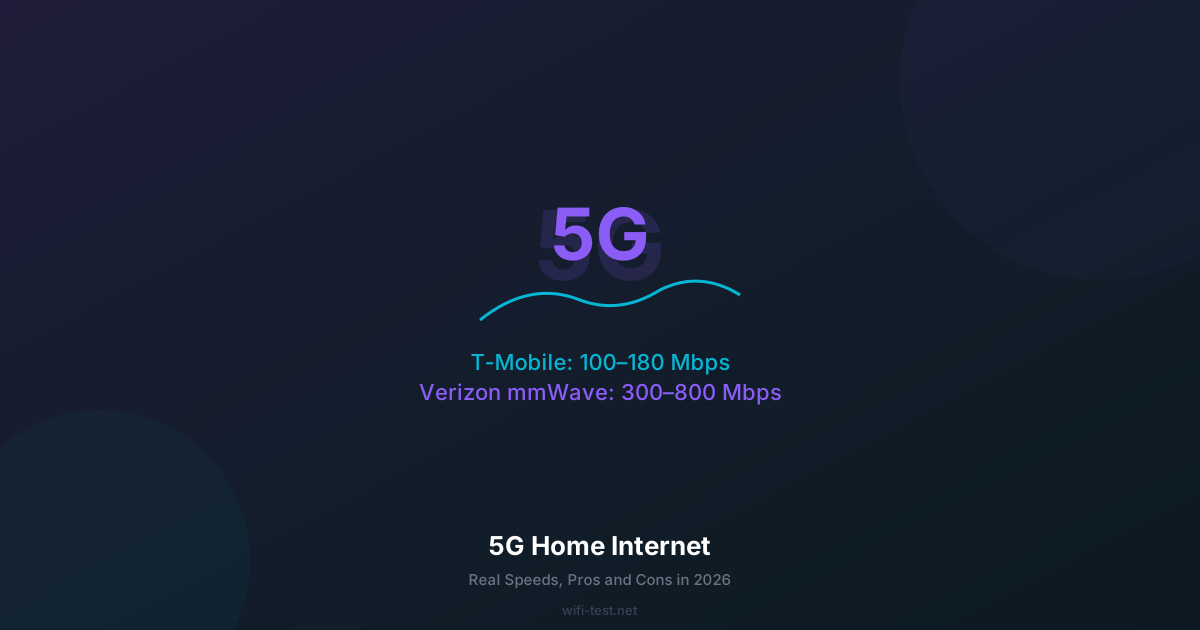
- T-Mobile Home Internet (mid-band 5G): median 100–180 Mbps download, 15–30 Mbps upload.
- Verizon 5G Home (mmWave, dense urban): median 300–800 Mbps download, 50–100 Mbps upload.
- Verizon 5G Home (sub-6 GHz, suburban): median 80–200 Mbps download.
- AT&T Internet Air: median 100–200 Mbps download in covered areas.
The variance is enormous. Two houses on the same street can get 50 Mbps and 300 Mbps from the same provider, depending on tower proximity and obstruction. Run a test on your current connection before deciding whether to switch.
3. The latency reality
This is where 5G home internet falls short compared to fiber and cable:
- Fiber / cable ping: 5–20 ms
- 5G home internet ping: 30–70 ms
- 4G LTE home (older gateways): 40–100 ms
For streaming, browsing, and casual gaming, 40–60ms is fine. For competitive online gaming or real-time video calls with very low latency requirements, 5G home internet introduces noticeable delay compared to fiber. See our ping vs latency guide for the full gaming impact breakdown.
4. The big advantages
No installation, no technician
Cable and fiber require a technician visit, sometimes scheduled weeks out. 5G home internet ships a gateway to your door — plug it in, connect to its WiFi, and you're online in minutes. For renters or people who move frequently, this is a genuine game-changer.
No contract
Most 5G home internet plans are month-to-month with no early termination fees. Cable providers still frequently lock customers into 12–24 month contracts.
Price
T-Mobile Home Internet costs around $50/month (or $35–40/month bundled with T-Mobile mobile). That's significantly cheaper than most cable plans at comparable speeds.
Availability in underserved areas
Fiber is still unavailable in many suburban and rural areas. Where 5G coverage exists, 5G home internet can deliver 50–150 Mbps where cable only offered 25 Mbps DSL previously.
5. The real disadvantages
Congestion during peak hours
5G home internet users share tower capacity with mobile users. During peak hours (6–10 PM), T-Mobile Home Internet speeds can drop 30–60% in congested areas. Unlike fiber/cable, you're sharing tower capacity with everyone in your neighbourhood on their phones too.
High latency compared to wired
The wireless hop between your home and the tower adds 20–40ms compared to a wired connection. This is compounded by CGNAT (Carrier-Grade NAT), which most 5G home providers use, adding further latency for some applications.
Weather and physical interference
Heavy rain, dense foliage, and physical obstructions between your home and the tower affect performance. This is not an issue with fiber or cable.
Upload speed limitations
Upload speeds on 5G home are typically 15–30 Mbps on mid-band — significantly less than symmetric fiber. If you work from home with heavy video conferencing or upload large files regularly, this limitation matters.
6. Who should choose 5G home internet in 2026?
5G home internet is the right choice if:
- Fiber is unavailable in your area and cable offers DSL-era speeds.
- You move frequently and need easy setup/cancellation.
- You primarily stream video and browse — not gaming competitively.
- You want a cheaper alternative to cable at similar speeds.
Stick with fiber or cable if:
- Fiber is available — it's faster, lower latency, and more reliable.
- You game competitively (consistent sub-20ms ping required).
- You upload large files regularly (video creator, remote developer).
- Your household has 5+ simultaneous heavy users.
Conclusion
5G home internet has matured significantly in 2026. For the right user — suburban or rural, light-to-moderate internet user, wants flexibility — it's a genuine cable-replacement. For heavy upload users, competitive gamers, or anyone with fiber access, it's a step backward.
▶ Test your current internet speed — is it fast enough?